Blog Posts
How movement and choice can help transitioning from one thing to the next
Vestibular input comes from movement experiences like:
swinging
spinning
jumping
marching
rocking
climbing
balancing
animal walks
This type of movement helps wake up, organize, and regulate the brain and body. For many children, vestibular movement can help the nervous system “reset” during transitions.
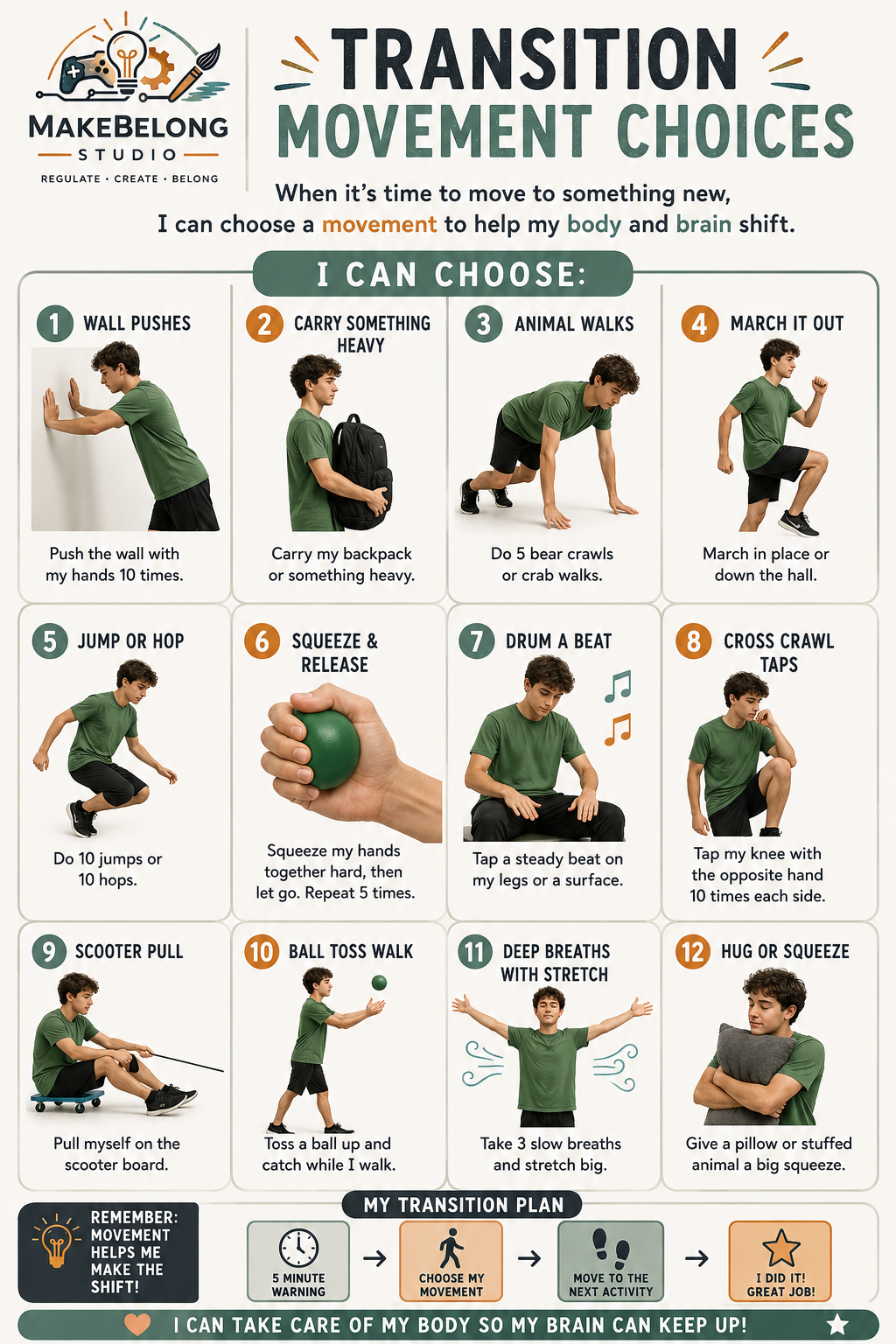
Examples from our Transition Movement Choices chart include:
March It Out
Jump or Hop
Animal Walks
Ball Toss Walk
Deep Breaths with Stretch
These activities help children physically move from one state into another instead of expecting their brains to make an abrupt shift without support.
What Is Proprioceptive Input?
The proprioceptive system is our body’s sense of pressure, muscle work, and joint position. It helps us know where our body is and how much force we are using without having to think about it consciously.
Proprioceptive input is often called “heavy work” because it involves pushing, pulling, squeezing, lifting, carrying, or deep pressure.
This type of sensory input is incredibly regulating for many children because it helps the body feel grounded, organized, and safe.
Examples include:
pushing against a wall
carrying something heavy
squeezing a pillow
pulling resistance bands
crab walks
climbing
tight hugs
pushing or pulling weighted objects
Examples from our Transition Movement Choices chart include:
Wall Pushes
Carry Something Heavy
Scooter Pull
Hug or Squeeze
Squeeze & Release
Cross Crawl Taps
These movements provide calming, organizing input that can reduce transition anxiety and help children feel more prepared to shift activities.
Why Movement Helps During Transitions
When a child becomes dysregulated during transitions, their nervous system is often stuck between two states:
emotionally attached to the previous activity
uncertain about what comes next
overwhelmed by sensory or cognitive demands
struggling to shift attention and body organization
Movement creates a bridge between those states.
Instead of expecting children to immediately stop one activity and calmly begin another, movement allows the body to participate in the transition process.
A child who is struggling to leave an activity may not need punishment, pressure, or repeated verbal reminders. They may need:
rhythmic movement
deep pressure
predictability
sensory organization
co-regulation
a physical transition ritual
Something as simple as:
doing 10 wall pushes
carrying a backpack
marching down the hallway
squeezing a pillow
doing bear crawls
taking deep breaths with a stretch
can completely change how a child experiences the transition.
Regulation Before Compliance
At MakeBelong Studio, we believe children do better when their bodies feel safe, connected, and regulated.
Transitions are not just about moving locations. They are nervous system shifts.
When we support those shifts intentionally, we are not only helping children get from one activity to another. We are helping them build lifelong skills in:
self-awareness
emotional regulation
flexibility
body awareness
resilience
confidence
self-advocacy
Sometimes the most powerful thing we can do is stop asking:
“Why can’t they just transition?”
and start asking:
“What support does their body need in order to make the shift?”
Transitions are hard for almost all children. Even adults struggle with them more than we realize. Think about how difficult it can feel to stop working when you are focused, leave a comfortable space, shift from rest to responsibility, or abruptly end something enjoyable. Children experience those same challenges, but with developing brains, less control over their environment, and fewer regulation tools.
For many kids, transitions can feel uncomfortable. For some children, especially neurodivergent children, transitions can feel physically and emotionally overwhelming.
You may notice this during everyday moments:
turning off a video game
leaving the playground
moving from home to school
stopping a preferred activity
switching classrooms
getting ready for bed
transitioning into homework
leaving one environment for another
Some children respond with frustration, avoidance, tears, freezing, aggression, or shutdown. Often, this is not defiance. It is a nervous system struggling to shift from one state to another.
At MakeBelong Studio, we believe regulation is not something children should simply be expected to “do.” Regulation is something we can support through intentional environments, movement, connection, predictability, and sensory experiences.
One of the most effective ways to support transitions is through movement, especially vestibular and proprioceptive input.
What Is Vestibular Input?
The vestibular system is the body’s movement and balance system. It helps us understand:
where our body is in space
how fast we are moving
whether we are still, spinning, jumping, rocking, or changing direction
At MakeBelong Studio, we talk often about helping children “regulate, create, and belong.” But what does regulation actually mean?
Regulation is the ability to feel safe, connected, and balanced enough inside our bodies and minds to participate meaningfully in the world around us.
When children are regulated, they can:
think flexibly
tolerate frustration
connect socially
communicate more clearly
learn
create
problem solve
recover from disappointment
engage with curiosity and joy
When children are dysregulated, those same tasks can feel overwhelming or impossible.
Some children become louder, more impulsive, or physically active when dysregulated. Others withdraw, shut down, avoid interaction, become rigid, or emotionally flood. Dysregulation is not “bad behavior.” It is often a signal that a child’s nervous system is overloaded, under-supported, or struggling to feel safe and connected.
And here’s something important:
Regulation looks different for every child.
Some children regulate through movement.
Some through quiet.
Some through sensory input.
Some through connection.
Some through repetition and predictability.
Some through creativity and imagination.
This is why one-size-fits-all environments often fail children. The same experience that energizes one child may completely overwhelm another.
At MakeBelong Studio, we believe regulation is not something children should have to “earn” before they are allowed to participate. Regulation is something environments can actively support.
What Does It Mean to Be “Regulated” — And Why Does It Matter So Much for Children?
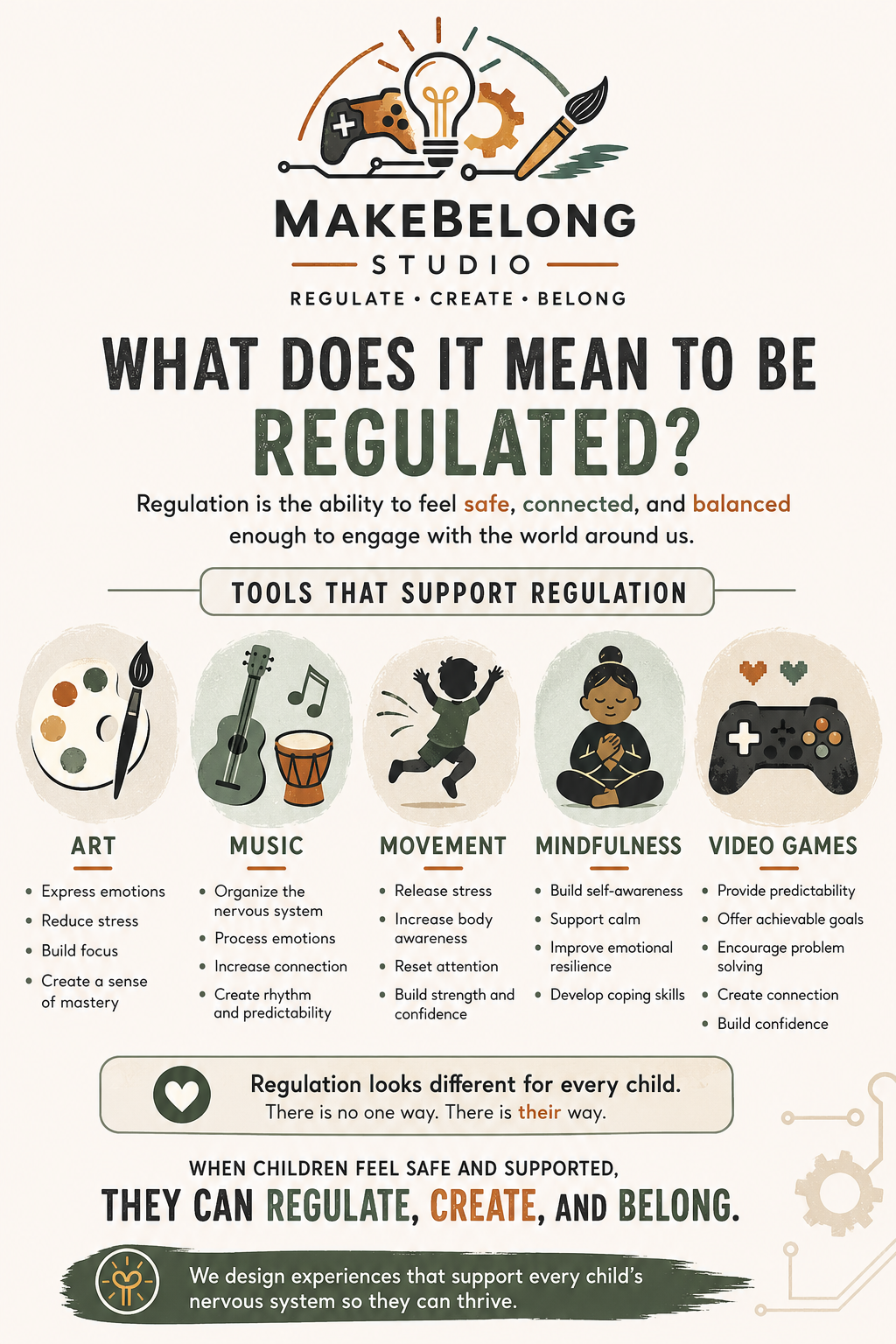
Art as Regulation
Art allows children to externalize internal experiences that may be difficult to explain with words.
Painting, building, sculpting, collaging, and designing can:
reduce stress
increase emotional expression
support focus
provide sensory feedback
create a sense of mastery and competence
Process art is especially powerful because it removes pressure around perfection and allows children to explore materials, ideas, and emotions freely.
Sometimes a child who cannot verbally explain what they are feeling can communicate beautifully through color, texture, movement, and creation.
Music as Regulation
Music can organize the nervous system in profound ways.
Rhythm, repetition, melody, and predictable patterns can help children:
transition between activities
regulate energy levels
process emotions
connect socially
feel grounded and safe
Some children regulate through calming music. Others regulate through energetic music, drumming, singing, dancing, or repetitive beats. Music can create emotional connection even when verbal communication feels difficult.
Movement as Regulation
Children are not designed to sit still for long periods of time.
Movement helps organize the sensory system and supports emotional regulation by giving the body opportunities to release stress, increase body awareness, and reset attention.
Movement-based regulation might include:
swinging
climbing
stretching
obstacle courses
dancing
jumping
yoga
spinning
mindful movement games
For many children, movement is not a distraction from learning. It is what makes learning possible.
Mindfulness as Regulation
Mindfulness helps children notice what is happening inside their bodies and emotions without immediately becoming overwhelmed by it.
This can look like:
breathing exercises
guided visualization
sensory noticing
grounding activities
quiet reflection
body scans
calming routines
Mindfulness is not about forcing children to be perfectly calm or silent. It is about helping them build awareness, safety, and recovery skills over time.
Video Games as Regulation
Video games are often misunderstood as purely stimulating or isolating, but for many children, gaming can actually be deeply regulating.
Games can provide:
predictability
repetition
achievable goals
creative problem solving
social connection
emotional recovery
autonomy and control
immersive focus states
For neurodivergent children especially, gaming worlds can feel more understandable and manageable than the unpredictability of social environments.
At MakeBelong Studio, we believe video games can become powerful tools for connection when used intentionally through collaborative play, design challenges, storytelling, movement integration, and shared creativity.
Regulation Creates the Conditions for Belonging
Children do not learn, connect, or create most effectively when they are overwhelmed.
They thrive when they feel safe enough to participate authentically.
That is why regulation matters so deeply.
When children experience environments that support their nervous systems rather than constantly fighting against them, they gain access to:
creativity
confidence
flexibility
empathy
connection
self-expression
belonging
At MakeBelong Studio, we design experiences that intentionally support regulation through creativity, movement, sensory exploration, collaboration, and play because we believe every child deserves spaces where they can fully regulate, create, and belong.

Have Questions? Let’s Chat!
Drop us a note and we’ll craft your learning adventure together.